


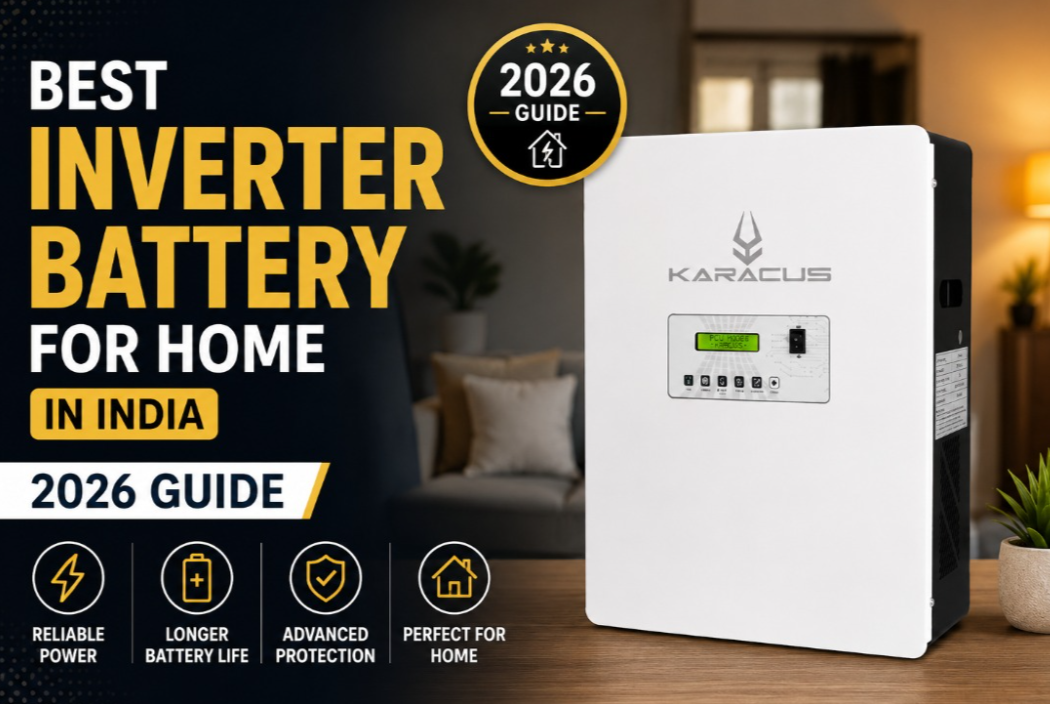
Nowadays, in the modern era, power backup is a must in every home in India. Having a good backup plan can make a big difference when the electricity goes out; it can help keep fans and lights running, maintain Wi-Fi routers, TVs, and computers, and much more. When thinking about a lithium battery inverter, selecting the correct battery size and inverter combination is a crucial factor to ensure optimal performance.
There are several options to choose from, and knowing your power needs will help you choose the appropriate lithium inverter battery for your home.
What is a lithium inverter battery?
A lithium inverter battery is an energy storage device that stores electricity and acts as a backup power source in case of a power outage. When connected to an inverter, the stored DC electricity is converted into AC power that can run household appliances.
Lithium technology typically provides faster charging, longer cycle life, and reduced size and maintenance requirements compared to a traditional lead-acid inverter battery system.
Steps to Choose the Right Lithium Battery
1. Calculate Your Power Requirements
The first step is to determine how much power your home needs during an outage. Make a list of the appliances you want to operate, such as:
- Fans
- LED lights
- Television
- Wi-Fi router
- Computers
- Refrigerators
- Other essential appliances
Check the wattage of each appliance and calculate the approximate total load. This helps you select an appropriately sized inverter and battery.
2. Determine Your Required Backup Time
Think about how long you normally experience power cuts. If you need backup for only a few hours, a smaller battery may be sufficient. For longer outages, you will need greater battery capacity.
Battery capacity is commonly expressed in Ah (ampere-hours) or kWh. A higher capacity generally allows the system to store more energy and provide longer backup, depending on the connected load.
3. Choose the Right Inverter Capacity
Your battery and inverter should work together as a properly sized system. An inverter with insufficient capacity may not be able to handle the appliances you want to operate.
If you are purchasing an inverter lithium battery system, check the inverter’s rated capacity, output waveform, efficiency, and compatibility with the lithium battery.
4. Consider Charging Speed
Charging performance is especially important in areas with frequent power interruptions. A lithium battery can generally support faster charging than many traditional battery technologies.
Choosing a system with suitable charging capabilities can help ensure that your battery is ready for the next power cut.
5. Check Safety Features
Safety should always be a priority when selecting a home battery system. Look for lithium batteries with a reliable battery management system (BMS).
A good BMS can monitor battery conditions and help protect against overcharging, over-discharging, overheating, and short circuits.
Why Choose Lithium Over Traditional Batteries?
A lithium inverter battery can offer several advantages, including longer cycle life, faster charging, compact size, low maintenance, and efficient energy storage. These features make lithium technology an attractive option for modern homes.
However, the right choice ultimately depends on your electricity requirements, budget, backup expectations, and available space.
How to Find the Best Inverter with a Battery for Home?
The best inverter with battery for home is not necessarily the most expensive model. It should match your home’s power load and provide the backup duration you actually need.
Before purchasing, compare battery capacity, inverter capacity, charging time, safety protection, warranty, and efficiency. Proper sizing can help you avoid unnecessary costs while ensuring dependable backup during power cuts.
Final Thoughts
The first step in selecting the right lithium battery for your house is to determine the amount of electricity you require. Determine the required load, estimate backup time, find a compatible inverter, and review warranty and important features (BMS protection, charging performance, etc.).
By working with our inbuilt lithium battery inverter, you take away all the hassle of finding the correct battery and inverter separately, thereby ensuring a good power backup system ready for your home that is zero-maintenance, efficient, and reliable.